I have been involved with the Red Cross as a volunteer in the Public Affairs function since 2001, when I just showed up at the Arlington, Va., chapter on September 11 to see “how I could help.” Because of the scale of the disaster that day, most supply trucks couldn’t get into the area. I called local supermarkets who donated food to supply the volunteers and firefighters working on the disaster. You can read about my experience that day in this newsletter article I wrote in 2001 (Being Counted in a Crisis, pdf, see page 4).
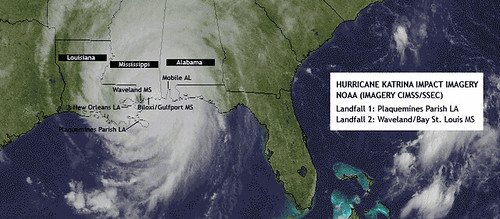
Since that day I have responded (as a public affairs volunteer) to the 2002 flood in San Antonio, hurricane Katrina and countless apartment and house fires. The Red Cross San Antonio chapter responds to about four or five fires a week to ensure the victims have food, clothing and shelter.
One of the things that often disturbs me in my work with the Red Cross is the way that the volunteers are received by the disaster victims, sometimes with great emotional gratitude and sometimes with all out hatred. I was relieved to hear that there is a cycle to a disaster. In much the same way that there are stages of mourning, there are also phases a community goes through after experiencing a disaster.
Emotional Phases in Disaster Recovery
Heroic Phase: In the aftermath of the disaster, there is a strong emotional response that focuses on helping people survive and recover. People sacrificially give money and assistance to those in need and those that are most effected by the disaster often receive those helping with intense gratitude.
Honeymoon Phase: As the community moved toward clean-up and recovery, people who experienced the event, draw together to talk about their shared understanding and build on new ideas to prevent or support the community on an ongoing basis.
Disillusionment Phase: Disappointment over delays or unmet expectations lead to people returning to individual problem solving. This phase often begins as the media attention for a disaster begins to wane. Often intense criticism of agencies and organizations starts, especially if the disaster was a large one.
Reconstruction Phase: There is a reaffirmation in the belief of one’s community. This can be associated with landmark events, such as one-year anniversaries, or the start of a major reconstruction projects.
In the disillusionment phase, things can get very ugly indeed, but even in its darkest days I have never doubted my association with the Red Cross. I knew that the volunteers and staff, in every operation I have ever worked, were giving their all to assist the community. While change and improvement are always in store after a large-scale disaster, like Katrina, it is also important to see the many people that selflessly gave of their time and money to support the community.
These stages of recovery should also be studied by companies in a crisis situation, as the affected community will be going through each of these stages, and it could inform your communicaiton strategy.
On a final note, I would recommend to any communicator getting involved in their local Red Cross (or Red Crescent) chapter. Not only is it immensely rewarding, it will also hone your skills under fire. You can get a list of ways to get involved in the United States at the U.S. Red Cross Web site. Internationally, you can check out the ICRC Web site.
Additionally, the Public Relations Society of American has a partnership with the Red Cross in a program called the Power of Two, which aims to recruit, train and utilize public relations professionals to help manage disasters on local and national levels.
